


Mokka-Milch-Eisbar: When a Berlin legend meets the modern elegance of steel
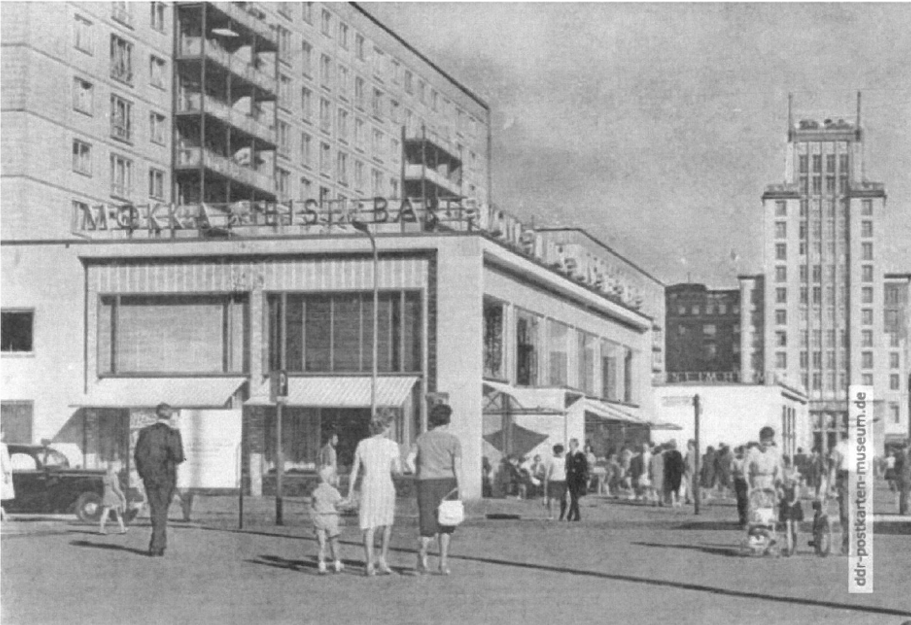
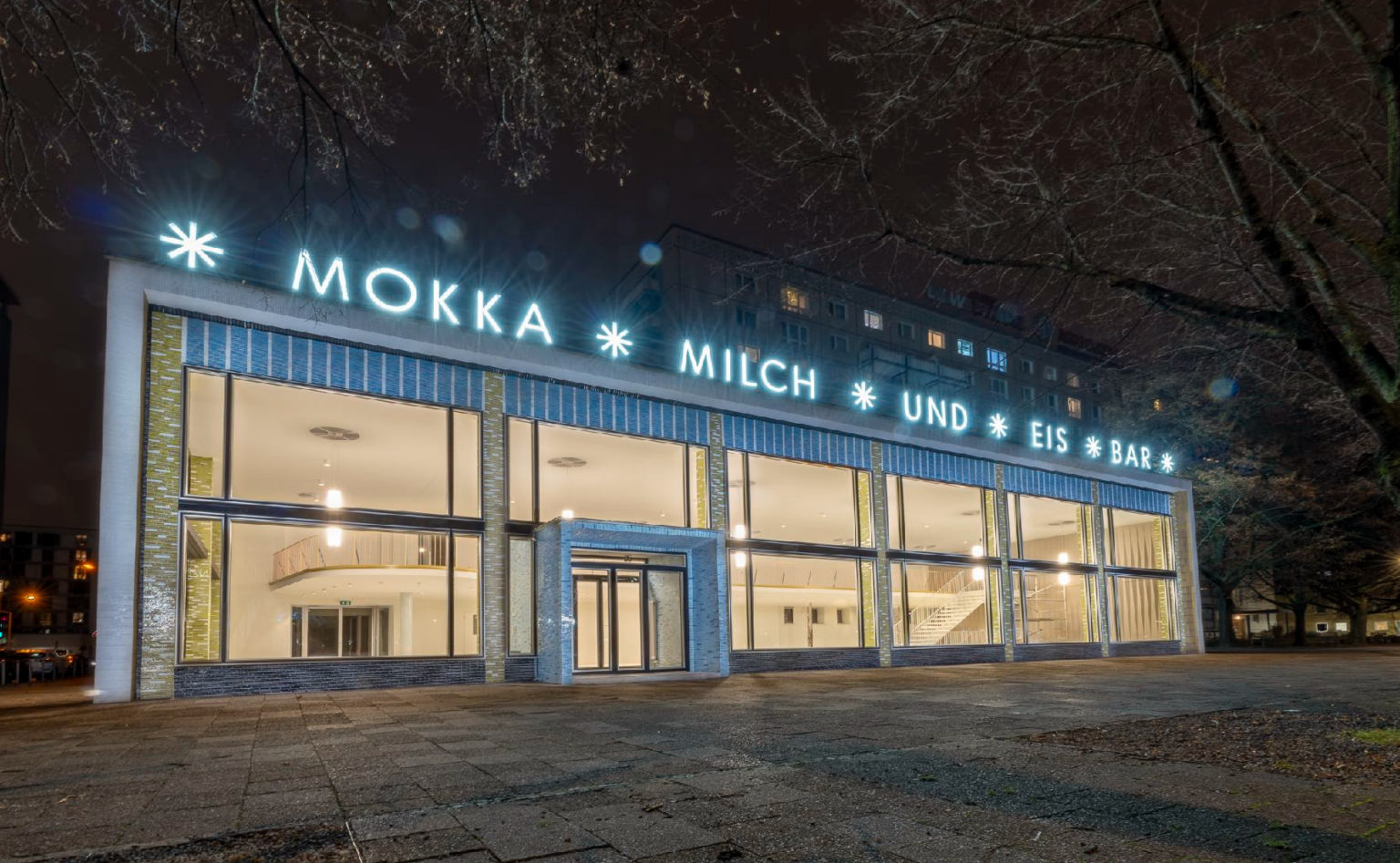
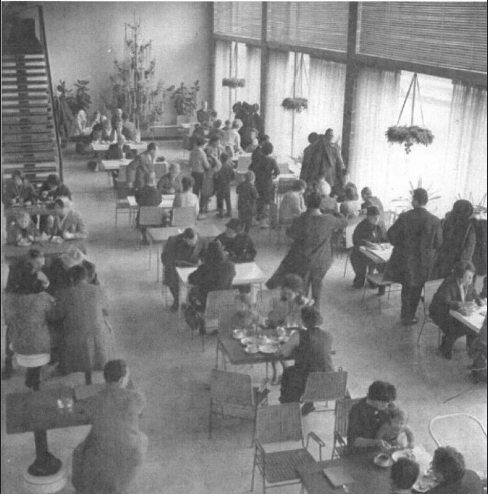
There are buildings that are not just made of concrete and glass. They are formed by memories of Sunday afternoons, the aroma of coffee, and the atmosphere of an era that shaped the visual identity of cities. The Mokka-Milch-Eisbar pavilion on Berlin’s Karl-Marx-Allee is exactly such a place. After years of remaining unused, this icon of modernism has undergone a sensitive reconstruction that restored its original lightness without compromising on today’s demands for thermal comfort and insulation.
Walter Franek and the vision of transparency
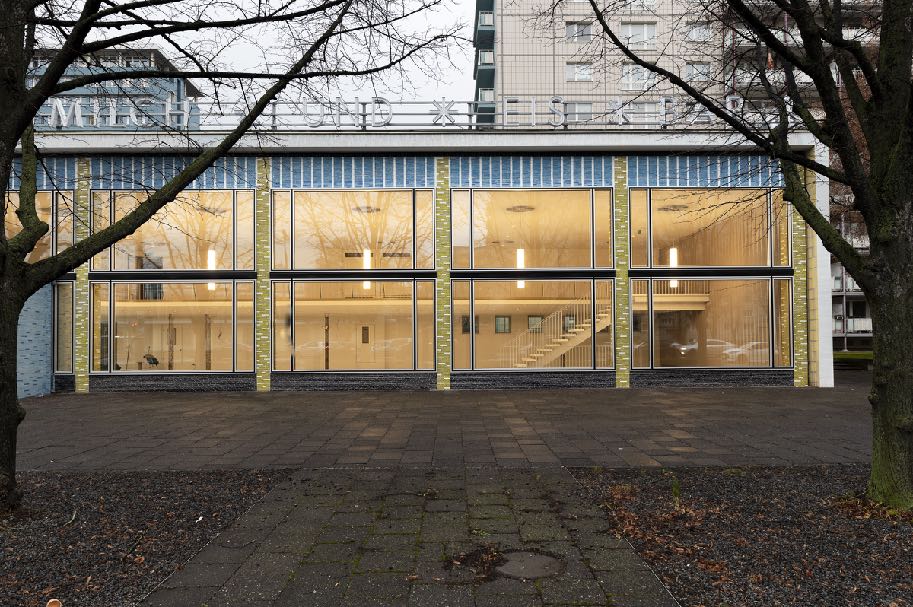
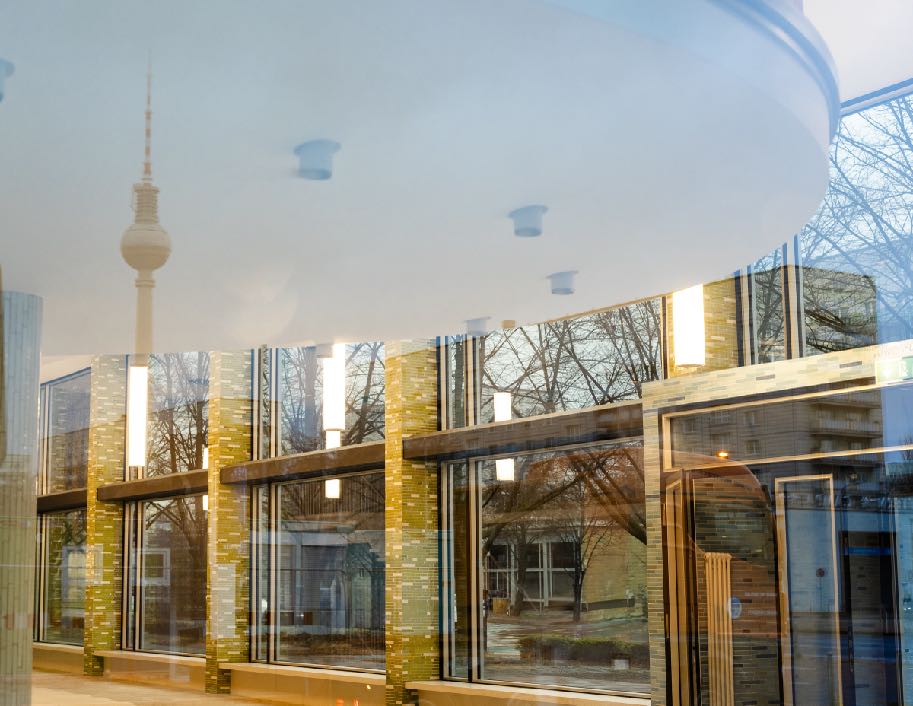
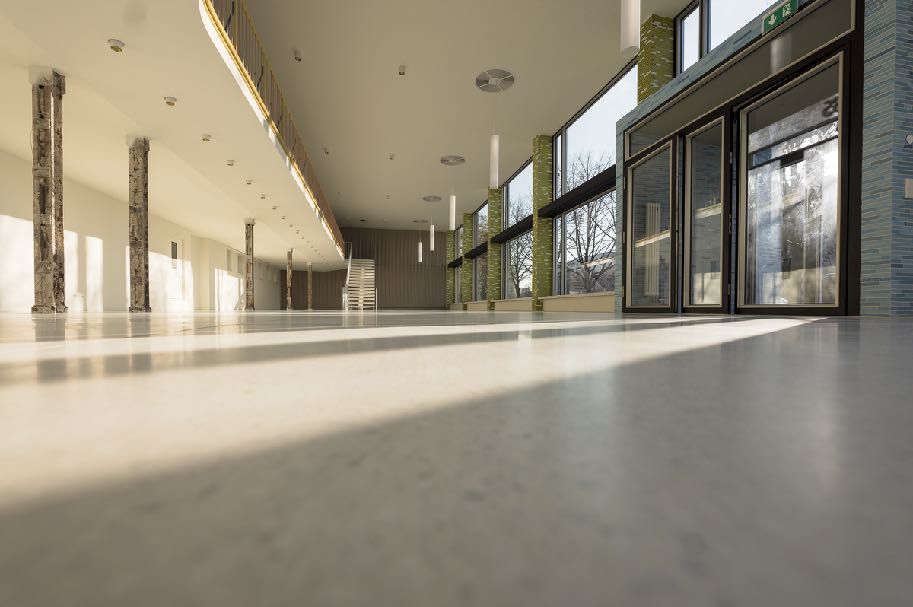
The pavilion was built between 1961 and 1962 according to designs by architect Walter Franek. Together with Kino International, Café Moskau, and Bar Babette, it represents one of the most significant complexes of post-war modernism in Europe. The architect’s intention was to create a space that, through its subtlety and generous glazing, visually communicates with its surroundings. It was precisely the minimalist design of the window frames that was a key element, one that often disappears with modern materials.
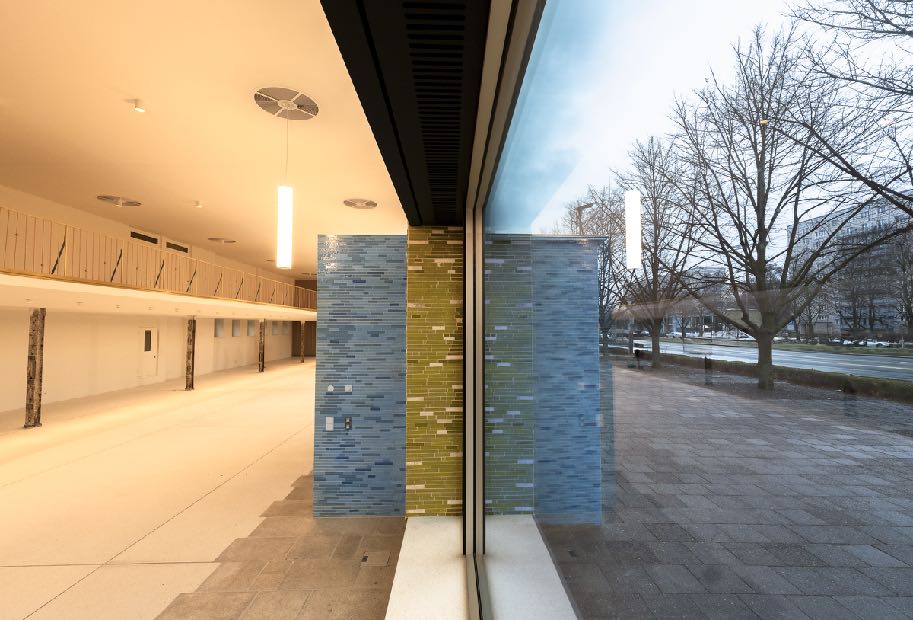
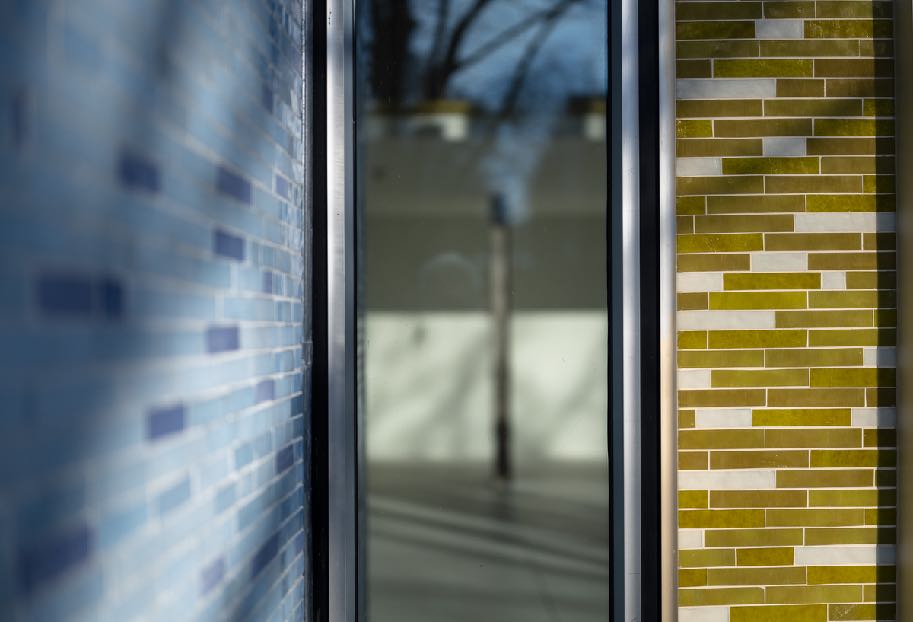
During the demanding restoration of the building, which took place under strict heritage conservation supervision, every detail had to meet two conditions: respect the original architecture while complying with modern structural, thermal, and technical requirements. From the street, the building had to look exactly as it did in the 1960s—the yellow ceramic facade, slender profiles, transparency, proportions, and elegant awnings had to remain untouched. At the same time, however, the original building envelope no longer met current technical or energy standards. Almost everything behind the visible architecture therefore had to be redesigned. “For us, this project was particularly interesting precisely because of the constant balance between preservation and innovation,” says Małgorzata Pietralik, Director of Steel Design.
Steel as a tool for architectural fidelity
The solution came through the use of steel. The Steel Design team faced a difficult challenge. “There was no standard solution for this project. Many steel profiles, glazing details, and facade joints had to be developed specifically for this building,” explains Pietralik. A standard modern steel profile with thermal insulation is too wide to look like the original. Conversely, a standard historical profile does not allow for the use of modern insulating glazing.
Systems from Steel Design allow for profiles with a visible width starting from just 40 mm, which is absolutely crucial for preserving Franek’s signature style. While aluminum or plastic systems would require more massive frames, steel allowed for the preservation of the building’s delicate proportions while integrating modern insulating glass and seals. “Given that the building is listed as a protected monument, the challenge of this project was clear from the very beginning: to preserve the appearance but completely improve the functionality inside,” explains Małgorzata Pietralik.
For the large facade openings on the south and west sides and for the main external doors, a slender steel system with thermal insulation from Jansen was deployed. Specifically, the Jansen ISO fineline 70 plus profile was used for both fixed and operable window elements. Its visible face widths are intentionally very narrow, allowing it to harmonize perfectly with the visual intent of the original 1962 window frames, while the interior of the profile hides modern polyamide thermal insulation and sophisticated chamber geometry. For the external door elements, which required even higher thermal insulation and airtightness properties, the architects chose the Jansen Hermetic 70 system. *
Every connection surface had to be custom-developed—from bespoke glazing beads made of extruded aluminum with an anodized finish in the color neusilberfarbig (new silver) to custom cover strips and precise integration with the existing concrete columns.
Technical parameters of glazing and energy standards
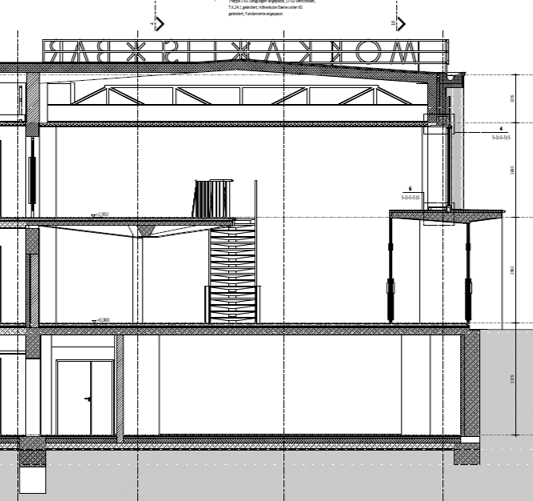
The key to success was meeting strict energy standards without disrupting the building’s historical transparency. The use of conventional solar control glass with significant reflection was completely ruled out by heritage conservation. The developers therefore chose a special composition of triple insulating glass: 44.2 Combi Neutral (61/32) / 16 SSPU / 6 ESG FL.
The thermal properties of the facade systems were verified according to the DIN EN 410 standard. The polyamide insulator in the Jansen profiles effectively breaks thermal bridges in the frame. All connections with the historical structure create a continuous thermal envelope—they are completely filled with mineral wool and sealed on both sides with EPDM membranes.
An exceptionally demanding engineering task lay in the dimensional tolerances. The horizontal steel load-bearing profile, connecting the upper and lower window panels across several openings, had to be aligned with millimeter precision, leaving almost no margin for error. Given the sixty-year age of the original structure, this was a huge challenge. Furthermore, these load-bearing profiles were treated with hot-dip galvanizing, which guarantees the long-term resistance of the steel against surface condensation.
Details referencing the past
The selection of visible materials and surfaces was strictly based on the requirement that the building appear 100% authentic and faithfully reflect the aesthetics of the early 1960s. The facade profiles and external doors are therefore made of steel with a matte to silk-matte powder coating in RAL 7021 (black-grey), which is sensitively complemented at the foyer entrance doors by a powder coating in RAL 7047 (telegrey 4).
Perfect material harmony is emphasized by sealing strips made of extruded aluminum and door and window hardware. Both are anodized in the color of new silver (neusilberfarbig 0205), which ideally matches the lockable FSB window handles (type 34 1005 09030) in an identical visual finish. A distinctive aesthetic element of the exterior is also the drop-arm awnings on the southern facade. These consist of red-and-white striped fabric and were manufactured exactly according to original photographic documentation.
High demands for historical fidelity do not exclude modern technologies. An example of this synergy is the main foyer doors equipped with a Dorma Kaba M-SVP 3500 self-locking multi-point panic lock with motorized unlocking. The advanced access control system is thus fully functional but remains completely hidden inside the subtle historical profile. This approach, which masterfully combines top-tier technological parameters with visual purity, subsequently permeates the entire building and also defines the design of the interior doors.
Interior doors: Hidden functionality in a unified design
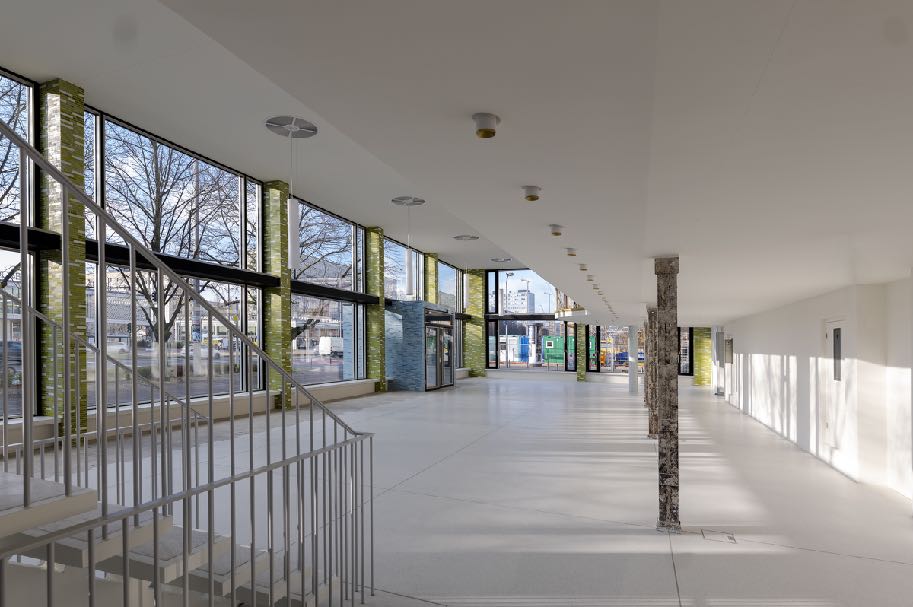
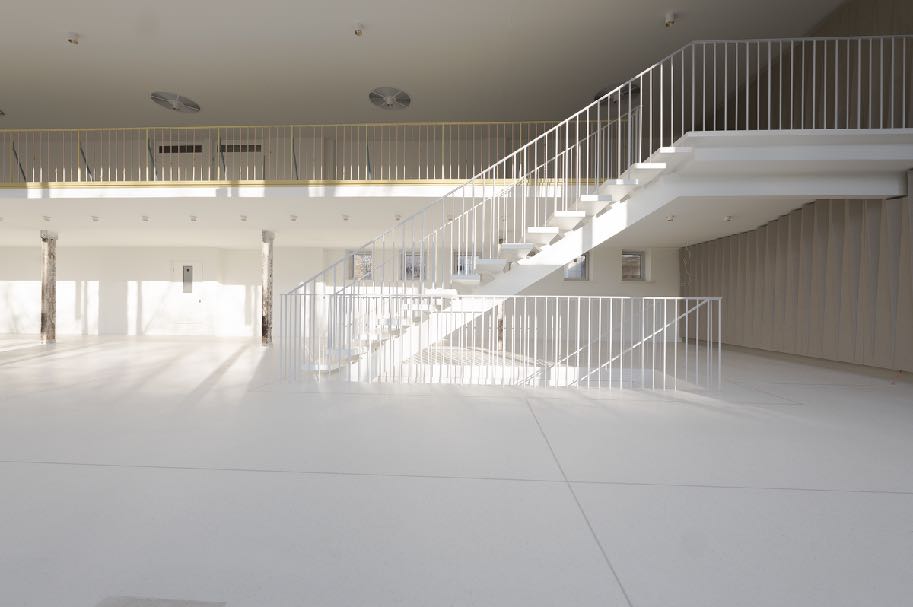
The exceptional nature of the Steel Design system is fully revealed in the interior, where a series of slender steel-framed doors unifies the space. Fire-resistant doors are usually characterized by more massive frames and more conspicuous hardware, which would have been disruptive in this concept. Here, however, the technical parameters were perfectly hidden—fire-rated and standard doors are visually completely indistinguishable and blend into one calm whole in RAL 7047 telegrey 4 with anodized handles in the color of new silver. **
Project timeline
The entire restoration process of this architectural icon required an extensive preparatory phase, which kicked off as early as 2019 with the closure of the building and the start of demanding design work. Following detailed planning, the production of precise samples, and careful coordination, the actual assembly and construction work began on-site in December 2023. The project was successfully completed and handed over in June 2025. The on-site implementation thus lasted approximately 18 months, which clearly underscores the high complexity of the entire intervention and the extraordinary sensitivity with which this listed building was approached from a heritage conservation perspective.
Steel Design technology on the domestic market
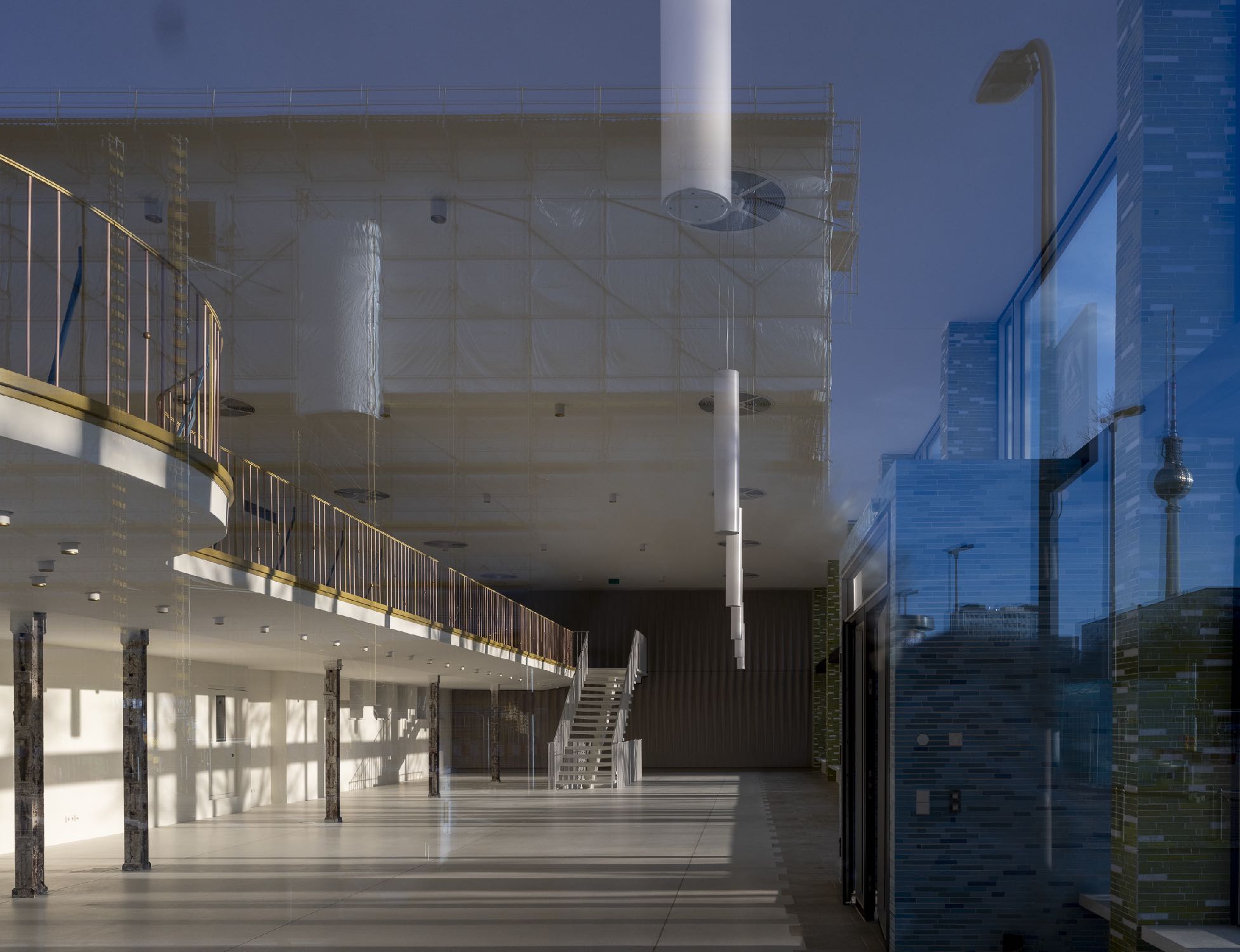
Thanks to this technological symbiosis, Mokka-Milch-Eisbar can once again serve as a meeting place where subtle glass walls function as an invisible frame for vibrant Berlin. The search for balance between historical detail and modern functionality is a theme that resonates strongly in Czech architecture as well.
The company DOORNITE s.r.o., the largest Czech door manufacturer, is the exclusive supplier of Steel Design systems for the domestic market. Steel glass doors and partitions offer architects freedom when designing new interiors and renovations, as everything is custom-made for the specific project. They are an ideal solution where subtlety and material authenticity are priorities. The possibilities of this system were also one of the professional topics at this year’s Living Forum.
* Technical parameters
| Element / Parameter | Specifications and properties |
| Outer layer | Laminated glass (2× 4 mm with a 0.76 mm interlayer) with Combi Neutral 61/32 coating. Provides protection against solar radiation without disrupting the color neutrality of the facade. |
| Interspace | 16mm interspace with Super Spacer warm edge spacer. |
| Inner layer | 6mm Opti white low-iron tempered glass. Removes the natural green tint of float glass, ensuring a perfectly neutral view both inside and out. |
| Ug coefficient | 0.8 W/m²K – meets current demanding requirements for thermal insulation. |
| Total energy transmittance (g) | 0.34 |
| Light transmittance | 61% – the intentionally high value preserves the light-filled character of the original interior. |
** Door specifications
| Location and door type | Fire resistance | Total area | Technical specifics |
| From foyer to exhibition room 2 | Fire resistance T-30 (30 minutes) | approx. 7.3 m² | Double-leaf, center mullion, fixed side panels. Full functionality in all four connections with the adjacent F-90 construction. |
| From foyer to exhibition room 1 | No fire resistance | approx. 7.3 m² | Visually 100% identical to the fire-rated version, equipped with a mechanical hold-open device in the slide rail. |
| Between exhibition halls 2 and 3 | Fire resistance T-30 (30 minutes) | approx. 3.2 m² | Single-leaf connecting door in the same ultra-slim design. |
| South airlock door | No fire resistance | approx. 9 m² | Designed so that the profile and connection method do not differ in any way from the fire-rated elements. |