






How to unify a hallway where several doors meet at once?
The hallway is often the first place you see when you come home, and at the same time, it's the space where the most doors meet. You might know the feeling: some open into the room, others into the hallway, each has a different frame, and the result feels a bit disjointed.
The hallway is often the first place you see when you come home, and at the same time, it’s the space where the most doors meet. You might know the feeling: some open into the room, others into the hallway, each has a different frame, and the result feels a bit disjointed. However, there is a way to turn this technical crossroads into a design feature where all doors are flush in a single plane.
Rebated-free doors and a single plane with the wall
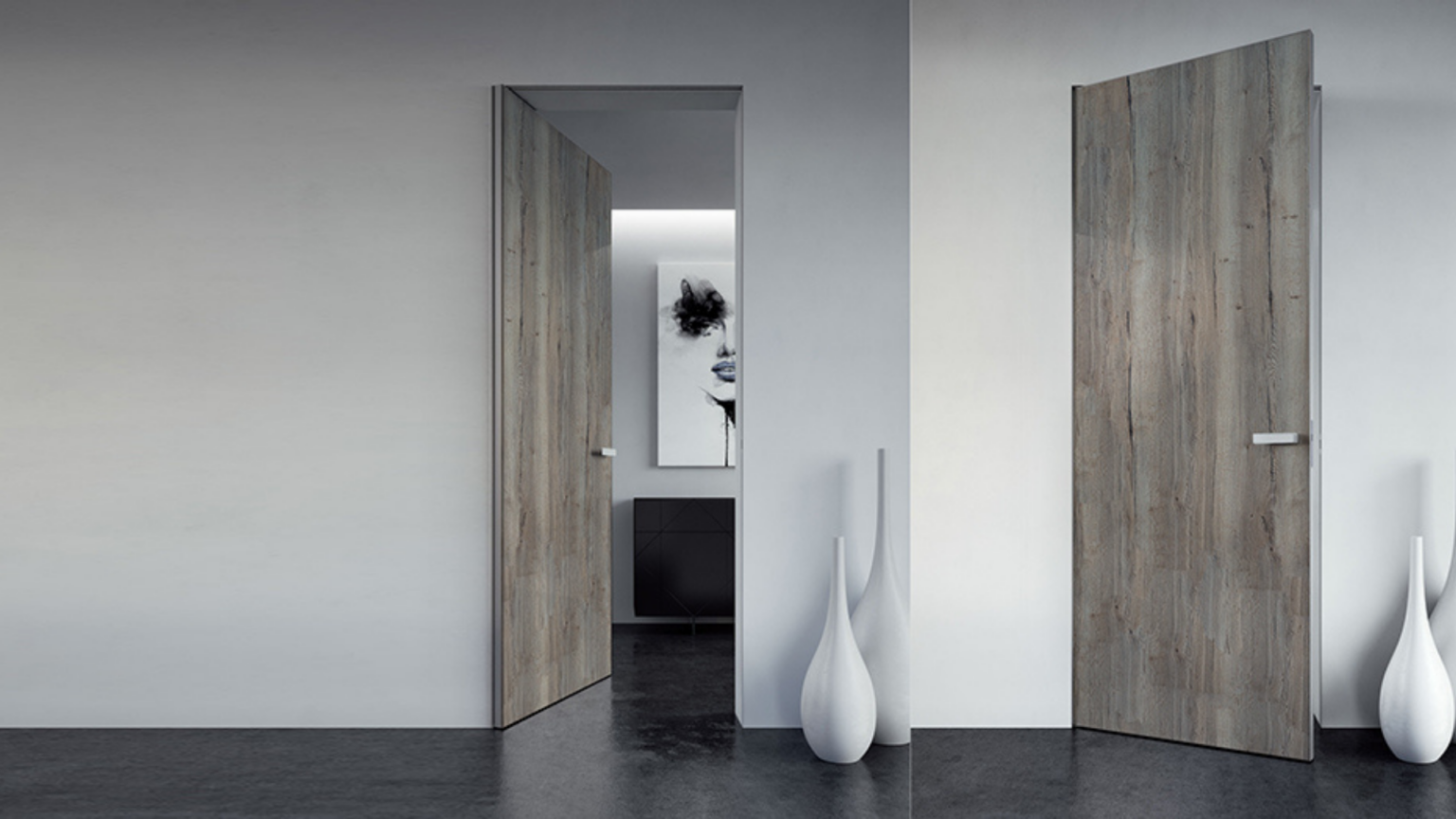
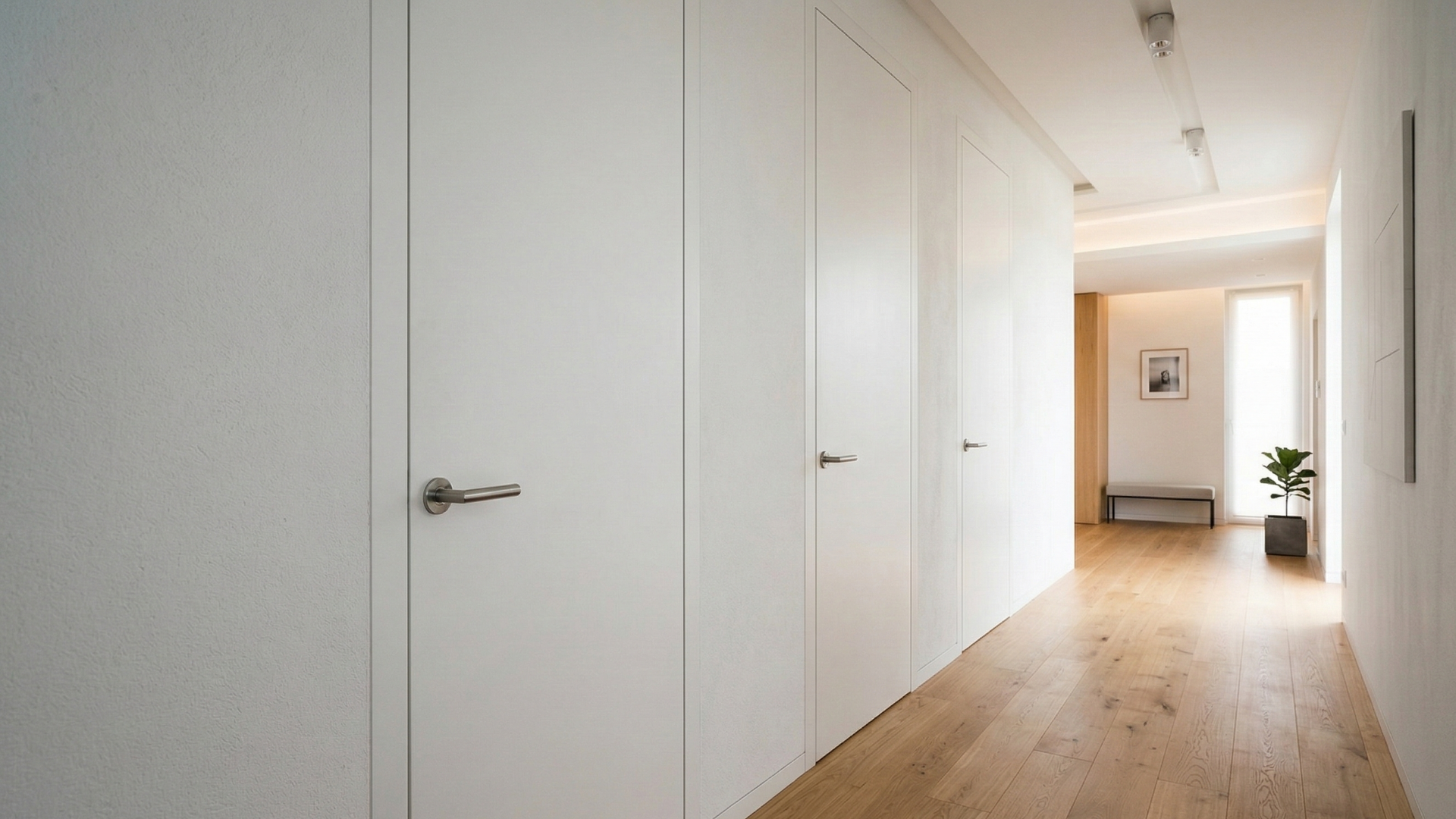
With classic doors, the leaf always protrudes a few millimeters in front of the frame. In a flush (rebated-free) design, this “step” disappears. The leaf is flush with the frame, and thanks to hidden hinges, nothing disrupts the wall surface. In a narrow hallway where you see several doors side by side, this detail immediately visually calms the entire space.
How reverse opening works
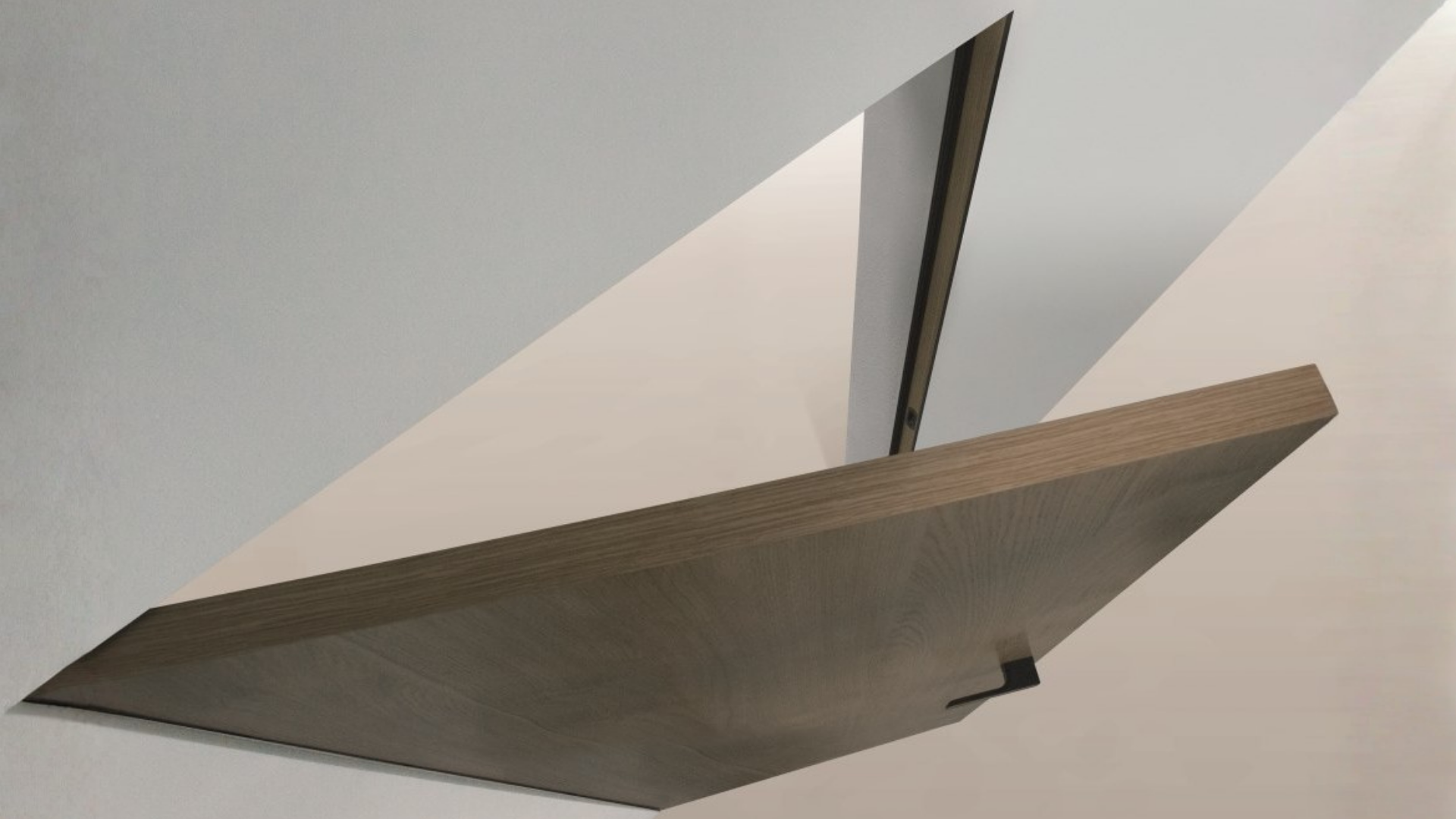
This is where mistakes are most often made. For practical reasons, you need the doors to open into the room (for example, into the bedroom so they don’t get in the way in the hallway), but at the same time, you want them to be flush with the wall from the hallway perspective, just like the others.
This is exactly what the reverse system is for. From the hallway, the doors look identical to flush doors—they are in the same plane as the frame—but they open “backwards,” i.e., into the room.
Unifying space without compromise
The combination of flush and reverse opening is the most common trick in modern architecture. It allows you to have doors in a single hallway that open both towards you and away from you without anyone noticing at first glance.
- No protruding frames
- No visible hinges
- One continuous line along the entire wall
This detail determines whether a hallway feels like a technical passage or a well-thought-out part of the interior. If you are planning a renovation or a new build, it is good to think about this harmony before classic door frames are installed.